
India's MSME sector faces a significant formal credit gap of approximately Rs 60 lakh crore, with traditional channels meeting only a fraction of the demand. A new report suggests that a centralised, interoperable digital layer could effectively bridge this gap and enhance productivity across the formal business sector by digitising workflows and enabling cash-flow-based underwriting.

RBI Governor Sanjay Malhotra stated that the central bank consistently views fintechs as 'valuable partners' in shaping India's future financial system, crediting the sector with expanding financial inclusion, enhancing customer experience, and streamlining credit delivery, particularly for MSMEs.

When it comes to raising funds, women entrepreneurs receive a disproportionately small share.

India's deposit growth has reached a 15-year high of 17.8 per cent, primarily driven by a surge in foreign currency non-resident (bank), or FCNR(B), deposits. This influx of funds is expected to lead to a softening of corporate loan rates as banks seek to deploy their excess liquidity.
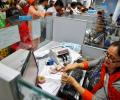
Indian bank credit expanded by 16.08 per cent year-on-year in FY26, marking its fastest pace since FY24, while deposits grew by 13.47 per cent, according to RBI data. Experts caution that year-end figures may be inflated due to reporting date changes, but acknowledge strong momentum in corporate, MSME, and retail segments.

The banking sector could see better loan growth in the third quarter of financial year 2026 (Q3FY26) with improved net interest margins (NIMs), though the full impact of latest rate cuts will be largely felt in the fourth quarter. There may be lower slippage in unsecured loans and microfinance institutions (MFIs) along with steady recovery trends, which should lower credit cost.

'Corporates now have multiple funding sources beyond banks, and many are sitting on large cash reserves.'

There is a need for real-time or near real-time credit reporting, instead of the current fortnightly system, to improve underwriting precision, enable timely reflection of borrower actions such as loan closures or repayments, and deliver a superior consumer experience, Deputy Governor of the Reserve Bank of India (RBI), M Rajeshwar Rao said on Wednesday.

'As the team builds, each of them will bring in a different perspective, new thinking.'

By democratising access to finance, empowering women and marginalised groups, and adapting to India's diverse regional landscapes, PMMY has helped fortify the country's grassroots growth engines, says Chief Economic Advisor to the Government of India, V Anantha Nageswaran.
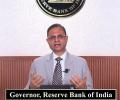
'India has the potential to grow at more than 7%, with the monetary policy providing a supportive hand.'
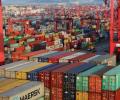
Exporters on Thursday demanded fiscal incentives, tweaking in customs duties on certain products and credit at affordable rates in the forthcoming Budget to boost exports and create jobs. In a pre-budget virtual meeting with Finance Minister Nirmala Sitharaman, the Federation of Indian Export Organisations (FIEO) said the depreciation of the rupee against the US dollar is affecting exports' competitiveness and the sector requires more support. "Creation of employment is the biggest challenge faced by the country...We would urge the government to provide fiscal support to units which provide additional employment in the export sector," the exporter's body said.

'I found it unbelievable that L&T said 45,000 jobs were waiting to be filled because of unavailability of suitable skillsets.' 'So, when the Opposition sweepingly says there are no jobs, I'm sorry... I'm not saying it's raining jobs, but there are jobs. The (skill) gap has to be bridged.'

While players in the financial ecosystem are opening up to the idea of receivables funding for the sector, this market needs a regulator, which a Parliament panel feels only RBI can provide.
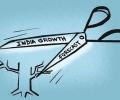
India's economy is projected to slow to 6.5 per cent in the fiscal year starting April but will remain the fastest growing major economy in the world as it fared better in dealing with the extraordinary set of challenges the globe has faced, the Economic Survey 2022-23 said on Tuesday. India's gross domestic product (GDP) growth of 6.5 per cent in 2023-24 compares with an estimated 7 per cent expansion in current fiscal year (April 2022 to March 2023) and 8.7 per cent in the previous year. Like the rest of the world, India too faced an extraordinary set of challenges in tightening financial conditions and supply chain disruptions from a prolonged war in Europe but "withstood them better than most economies", the annual document detailing the state of the economy said.

Record liquidity infusion by the central bank in the banking system during the financial year 2020-21 amid sluggish economic activity resulted in banks investing more in safe government papers than in extending loans, data from Reserve Bank of India (RBI) showed. This trend has not been seen in nearly two decades, barring 2016 - the year of demonetisation.

Enthused by India's financial inclusion drive, US-based Accion, one of the biggest micro finance organisations in the world, has renewed its focus in India. Michael Schlein, bottom, left, chief executive officer of Accicon, tells Namrata Acharya in an email interview the Wall Street and Silicon Valley are eager to participate in opportunities presented by the issuance of the small finance and payment bank licences, the expanded banking correspondent opportunities, and the Jan-Dhan Yojna.

'Unemployment barely figures in the Budget except as a derived demand from the industry and infrastructure.' 'There is no effort at direct attack on unemployment.'

The Budget emphasises on capacity building and empowerment of marginalised sections of society including farmers.

The opposition parties vehemently criticised the new 'one nation, one tax' system having four different rates instead of a single rate adopted in some countries including the UK and Singapore.

Sidbi acquires Ahmedabad-based start-up at hefty premium; founders deny link to govt.

Mohandas Pai took part in an hour-long chat on rediff.com
